Who knows better then those that participate under the full power of need. heh
Subject: Is sex work?
A U.S. Marine Colonel was about to start the morning briefing to his staff. While waiting for the coffee machine to finish brewing, the colonel decided to pose a question to all assembled. He explained that his wife had been a bit frisky the night before and he failed to get his usual amount of sound sleep. He posed the question of just how much of sex was "work" and how much of it was "pleasure?"
A Major chimed in with 75%-25% in favor of work.
A Captain said it was 50%-50%.
A Lieutenant responded with 25%-75% in favor of pleasure, depending upon his state of inebriation at the time.
There being no consensus, the colonel turned to the PFC who was in charge of making the coffee and asked for his opinion?
Without any hesitation, the young PFC responded, "Sir, it has to be 100% pleasure. The colonel was surprised and as you might guess, asked why?
"Well, sir, if there was any work involved, the officers would have me doing it for them." The room fell silent.
God Bless the enlisted man.
Wednesday, April 22, 2015


Tuesday, April 21, 2015
Wisconsin's John Doe Raids Outrageous : New Accounts Staggering
No one can comprehend the extent that the democrats have gone to attack Republicans in Wisconsin. The John Doe raids on private citizens for their Constitutional rights to free speech is nearly without parallel, even when considered and compared to those from the last century that brought on the Second World War.
Many in our country refuse to believe that such outrageous criminal actions could be carried out by an agency of the government against its citizens for having different beliefs then those that are in power. Even the main stream media are complacent in this nightmare.
This can't be happen in America, this could only happen in some third world country that is controlled by a tyrant. But it has happened here, and to refuse to believe doesn't say it didn't happen or make it go away.
Shocking New Accounts of the John Doe Raids
The latest edition of National Review magazine features a shocking and fresh new account of the tactics used to carry out the raids of conservative homes as part of the long-running John Doe investigation. This entire piece by David French is a must-read, but we wanted to highlight the new information about the details of the John Doe raids.
Many in our country refuse to believe that such outrageous criminal actions could be carried out by an agency of the government against its citizens for having different beliefs then those that are in power. Even the main stream media are complacent in this nightmare.
This can't be happen in America, this could only happen in some third world country that is controlled by a tyrant. But it has happened here, and to refuse to believe doesn't say it didn't happen or make it go away.
Shocking New Accounts of the John Doe Raids
The latest edition of National Review magazine features a shocking and fresh new account of the tactics used to carry out the raids of conservative homes as part of the long-running John Doe investigation. This entire piece by David French is a must-read, but we wanted to highlight the new information about the details of the John Doe raids.
"They came with battering rams."
Cindy Archer, one of the lead architects of Wisconsin’s Act 10 — also called the “Wisconsin Budget Repair Bill,” it limited public-employee benefits and altered collective-bargaining rules for public-employee unions — was jolted awake by yelling, loud pounding at the door, and her dogs’ frantic barking. The entire house — the windows and walls — was shaking.
She looked outside to see up to a dozen police officers, yelling to open the door. They were carrying a battering ram.
She wasn’t dressed, but she started to run toward the door, her body in full view of the police. Some yelled at her to grab some clothes, others yelled for her to open the door.
“I was so afraid,” she says. “I did not know what to do.” She grabbed some clothes, opened the door, and dressed right in front of the police. The dogs were still frantic.
“I begged and begged, ‘Please don’t shoot my dogs, please don’t shoot my dogs, just don’t shoot my dogs.’ I couldn’t get them to stop barking, and I couldn’t get them outside quick enough. I saw a gun and barking dogs. I was scared and knew this was a bad mix.”
She got the dogs safely out of the house, just as multiple armed agents rushed inside. Some even barged into the bathroom, where her partner was in the shower. The officer or agent in charge demanded that Cindy sit on the couch, but she wanted to get up and get a cup of coffee.
“I told him this was my house and I could do what I wanted.” Wrong thing to say. “This made the agent in charge furious. He towered over me with his finger in my face and yelled like a drill sergeant that I either do it his way or he would handcuff me.” They wouldn’t let her speak to a lawyer. She looked outside and saw a person who appeared to be a reporter. Someone had tipped him off.
The neighbors started to come outside, curious at the commotion, and all the while the police searched her house, making a mess, and — according to Cindy — leaving her “dead mother’s belongings strewn across the basement floor in a most disrespectful way.”
Then they left, carrying with them only a cellphone and a laptop.
David French's piece also includes the experiences of two individuals who provide aliases, "Anne" and "Rachel." Both accounts are similar in their terror and unbelievable details.
"It's a matter of life and death."
That was the first thought of “Anne” (not her real name). Someone was pounding at her front door. It was early in the morning — very early — and it was the kind of heavy pounding that meant someone was either fleeing from — or bringing — trouble.
“It was so hard. I’d never heard anything like it. I thought someone was dying outside.”
She ran to the door, opened it, and then chaos. “People came pouring in. For a second I thought it was a home invasion. It was terrifying. They were yelling and running, into every room in the house. One of the men was in my face, yelling at me over and over and over.”
It was indeed a home invasion, but the people who were pouring in were Wisconsin law-enforcement officers. Armed, uniformed police swarmed into the house. Plainclothes investigators cornered her and her newly awakened family. Soon, state officials were seizing the family’s personal property, including each person’s computer and smartphone, filled with the most intimate family information.
Why were the police at Anne’s home? She had no answers. The police were treating them the way they’d seen police treat drug dealers on television.
In fact, TV or movies were their only points of reference, because they weren’t criminals. They were law-abiding. They didn’t buy or sell drugs. They weren’t violent. They weren’t a danger to anyone. Yet there were cops — surrounding their house on the outside, swarming the house on the inside. They even taunted the family as if they were mere “perps.”
As if the home invasion, the appropriation of private property, and the verbal abuse weren’t enough, next came ominous warnings.
Don’t call your lawyer.
Don’t tell anyone about this raid. Not even your mother, your father, or your closest friends.
The entire neighborhood could see the police around their house, but they had to remain silent. This was not the “right to remain silent” as uttered by every cop on every legal drama on television — the right against self-incrimination. They couldn’t mount a public defense if they wanted — or even offer an explanation to family and friends.
Yet no one in this family was a “perp.” Instead, like Cindy, they were American citizens guilty of nothing more than exercising their First Amendment rights to support Act 10 and other conservative causes in Wisconsin. Sitting there shocked and terrified, this citizen — who is still too intimidated to speak on the record — kept thinking, “Is this America?”
The case of "Rachel" even included armed officers entering the bedrooms of her children while they were still asleep.
For the family of “Rachel” (not her real name), the ordeal began before dawn — with the same loud, insistent knocking. Still in her pajamas, Rachel answered the door and saw uniformed police, poised to enter her home.
When Rachel asked to wake her children herself, the officer insisted on walking into their rooms. The kids woke to an armed officer, standing near their beds.
The entire family was herded into one room, and there they watched as the police carried off their personal possessions, including items that had nothing to do with the subject of the search warrant — even her daughter’s computer.
And, yes, there were the warnings. Don’t call your lawyer. Don’t talk to anyone about this. Don’t tell your friends. The kids watched — alarmed — as the school bus drove by, with the students inside watching the spectacle of uniformed police surrounding the house, carrying out the family’s belongings. Yet they were told they couldn’t tell anyone at school.
They, too, had to remain silent.
The mom watched as her entire life was laid open before the police. Her professional files, her personal files, everything. She knew this was all politics. She knew a rogue prosecutor was targeting her for her political beliefs.
And she realized, “Every aspect of my life is in their hands. And they hate me.”
Fortunately for her family, the police didn’t taunt her or her children. Some of them seemed embarrassed by what they were doing. At the end of the ordeal, one officer looked at the family, still confined to one room, and said, “Some days, I hate my job.”
If you've been a regular reader of RightWisconsin, some of these details may not shock you. You've been aware of the outrageous paramilitary style tactics used to raid the homes of conservatives in a fishing expedition that is likely to net no charges.
But there is is something jarring when reading these new accounts. The insistence by investigators that the targets could not call their lawyers, that they couldn't tell another soul of the raid, and the gross humiliation of families and children should shock anyone who participates in politics and takes the Bill of Rights seriously.
These stories need to be told so that they don't happen again. These stories need to be told because those who initiated this investigation and these raids need to be held accountable.
Climate Change Legacy for Obama : More Insanity - More Failures
Insanity marches forward with Mr Obama and his legends of progressive socialist trailing closely behind. No bad program, no proposal to insane or beyond comprehension that Mr Obama won't champion.
It appears that if a program is detrimental to America, he is all for it. Big smile, lots of teeth as he sticks the knife in and twists.
Obama Looks to Paris to Leave His Climate Change Legacy
Source: S. Fred Singer, "Obama Expected to Bind US to CO2 Reduction at Paris Climate Meeting This Year," Independent Institute, April 17, 2015.
April 20, 2015
It appears that if a program is detrimental to America, he is all for it. Big smile, lots of teeth as he sticks the knife in and twists.
Obama Looks to Paris to Leave His Climate Change Legacy
Source: S. Fred Singer, "Obama Expected to Bind US to CO2 Reduction at Paris Climate Meeting This Year," Independent Institute, April 17, 2015.
April 20, 2015
In his State-of-the-Union address, president Obama again confirmed that "saving the climate" remains one of his top priorities. Yet an official December 2014 confab in Lima, Peru did not really conclude anything — certainly no binding Protocol to limit emissions of carbon dioxide (CO2) — but it "kicked the can down the road" to the next international gabfest in Paris, scheduled for 2015.
It is not at all difficult to predict what will happen in Paris; in fact, it is a "no-brainer." There will be an agreement of sorts, but it will be essentially meaningless. Yet it will be hailed as a "breakthrough" by the White House and thus form an important part of the "Obama Legacy." Meanwhile, there has been no significant warming for the past 18 years.
Consider:
It is not at all difficult to predict what will happen in Paris; in fact, it is a "no-brainer." There will be an agreement of sorts, but it will be essentially meaningless. Yet it will be hailed as a "breakthrough" by the White House and thus form an important part of the "Obama Legacy." Meanwhile, there has been no significant warming for the past 18 years.
Consider:
- The climate continues to plateau; no significant warming has occurred in nearly 20 years—in spite of a greater than 10 percent increase in CO2.
- Scientists, both alarmists and skeptics, are still trying to explain this "pause" — as it is sometimes called. The word Pause denotes an expectation that the climate will again warm — although no one has any acceptable hypothesis as to when the warming might resume, if ever.
Federal Reserve Holds Off On Interest Rate Rise? : Foreigners Are Worried
Did anyone ever wonder how it is that our economic health is left up to one person? Especially one that was appointed by a progressive socialist. She wasn't appointed just because she appears competent. I believe if our government were in the hands of Conservatives, Yellen would have no doubts on raising interest rates.
If Republicans win the White House in 2016, the attacks will come from all sides, and the federal reserve will be front and center with raising of interest rates to cause problems for the country and others.
Borrowing Rates Could Soon Be on the Rise
Source: Phillip Inman, "Markets Face New Threat As US Federal Reserve Ponders Interest Rate Rise," The Guardian, April 18, 2015.
April 20, 2015
If Republicans win the White House in 2016, the attacks will come from all sides, and the federal reserve will be front and center with raising of interest rates to cause problems for the country and others.
Borrowing Rates Could Soon Be on the Rise
Source: Phillip Inman, "Markets Face New Threat As US Federal Reserve Ponders Interest Rate Rise," The Guardian, April 18, 2015.
April 20, 2015
The moment U.S. Central Bank chief Janet Yellen makes the decision to increase borrowing rates will be a massive economic event. The prospect that higher interest rates in the world's largest economy could come this year has already sent the dollar surging against the pound and euro. It has also fuelled fears of a meltdown in countries that have borrowed heavily in the U.S. currency.
Borrowing is inherently risky, all the more so when the interest rate can change at short notice. Higher costs for those that have borrowed in dollars could cripple companies in Brazil and Turkey that were enticed by cheap credit to fund a new factory or office building, or just to pay the wages.
But while it is almost certain Turkey, Brazil, Russia and many others that have seen their businesses and governments borrow heavily in dollars to maintain their spending will suffer higher borrowing costs courtesy of Yellen, it seems unlikely funds in Europe now would opt to send billions of euros to banks in developing world economies such as Turkey, even when the returns are higher. That is because Turkey would be a risk too far when there are safe havens such as the United States starting to offer a return on totally safe investments like Treasury bonds.
Maybe Yellen will look at U.S. unemployment and consumer spending data at the Fed's meetings this month and in mid-June, and decide America remains too weak to withstand a rate rise. If she does, plenty of countries will cheer. Yet all the signals point towards a rise, with potential turmoil ahead.
Borrowing is inherently risky, all the more so when the interest rate can change at short notice. Higher costs for those that have borrowed in dollars could cripple companies in Brazil and Turkey that were enticed by cheap credit to fund a new factory or office building, or just to pay the wages.
But while it is almost certain Turkey, Brazil, Russia and many others that have seen their businesses and governments borrow heavily in dollars to maintain their spending will suffer higher borrowing costs courtesy of Yellen, it seems unlikely funds in Europe now would opt to send billions of euros to banks in developing world economies such as Turkey, even when the returns are higher. That is because Turkey would be a risk too far when there are safe havens such as the United States starting to offer a return on totally safe investments like Treasury bonds.
Maybe Yellen will look at U.S. unemployment and consumer spending data at the Fed's meetings this month and in mid-June, and decide America remains too weak to withstand a rate rise. If she does, plenty of countries will cheer. Yet all the signals point towards a rise, with potential turmoil ahead.
Fannie & Freddie Are Back : Obama Doubles Down on Failure
Oh my goodness - I wonder if anyone in these agencies knows the definition of insanity? But then, this is the agenda and prevailing ideology of the progressive socialist democrats, if a program is a catastrophic failure, double down on it.
Who voted for these people!!!!
Fannie and Freddie Are Back
Source: Elizabeth Macdonald, "Fannie and Freddie Restart Risky 'Affordable Housing' Programs", Fox Business, April 17, 2015.
April 20, 2015
Who voted for these people!!!!
Fannie and Freddie Are Back
Source: Elizabeth Macdonald, "Fannie and Freddie Restart Risky 'Affordable Housing' Programs", Fox Business, April 17, 2015.
April 20, 2015
After the housing collapse, and the bankruptcy of Fannie Mae and Freddie Mac, officials in Congress and the administration argued the two giants' massive role must be reduced in the housing market, with numerous hearings in Congress on how to wind down these two government-sponsored enterprises.
Banks, which aided and abetted the housing bubble, were hit with hundreds of billions of dollars in losses due to defaults and write-downs, and the U.S. economy suffered a severe downturn more than seven years ago.
But now Fannie and Freddie are back. Here is what they are doing:
But is this new effort good for taxpayers and the economy, or is this similar to programs that led to the subprime mortgage crisis and housing crash? Will taxpayers be on the hook for another mega-bailout, given that Fannie and Freddie combined were one of the biggest bailout cases of all, at $187.5 billion?
Jeb Hensarling, chairman of the House Financial Services Committee, has said that the Administration's new push is "an invitation by government for industry to return to slipshod and dangerous practices that caused the mortgage meltdown in the first place and wrecked our economy" and that they "must be rejected."
Banks, which aided and abetted the housing bubble, were hit with hundreds of billions of dollars in losses due to defaults and write-downs, and the U.S. economy suffered a severe downturn more than seven years ago.
But now Fannie and Freddie are back. Here is what they are doing:
- They just debuted their new HomePath Ready Buyer Program, which lets first-time homebuyers get up to a 3 percent rebate of a home's purchase price if they buy a Fannie Mae property.
- The new program could create $4,500 in savings on a $150,000 home for first-time buyers.
- In addition to the 3 percent rebate, Fannie Mae will refund the cost of the homebuyer education course.
But is this new effort good for taxpayers and the economy, or is this similar to programs that led to the subprime mortgage crisis and housing crash? Will taxpayers be on the hook for another mega-bailout, given that Fannie and Freddie combined were one of the biggest bailout cases of all, at $187.5 billion?
Jeb Hensarling, chairman of the House Financial Services Committee, has said that the Administration's new push is "an invitation by government for industry to return to slipshod and dangerous practices that caused the mortgage meltdown in the first place and wrecked our economy" and that they "must be rejected."
School Choice Accountable to Parents : Say No to Fed Vouchers
WOW - good news in that state governments are warned not to accept money from the federal government as anyone that hasn't been asleep knows, when the guy that knocks on your door and say 'I'm from the government and here to help', you know corruption is soon to follow.
The Federal Government Should Stay Away From School Choice
Source: Jason Bedrick, "Leave School Choice to the States," Townhall, April 16, 2015
April 20, 2015
In a memo earlier this month, two Third Way analysts vigorously argued that Congress should not include a federal voucher program as a part of the Elementary and Secondary Education Act (ESEA) reauthorization. However, the five reasons they give to oppose federal vouchers range from flawed to erroneous. Nevertheless, though the evidence suggests that school choice programs benefit students and are popular among voters, Congress should leave it to the states.
Here is how Third Way is wrong on school vouchers: They claim there is "little convincing evidence that students who receive vouchers are better off for it." School choice is one of the most-researched education policies, and the best studies overwhelmingly find positive results for some or all categories of participants. Eleven of 12 random assignment studies found statistically significant positive outcomes for students who won a school voucher or scholarship lottery relative to students who entered the lottery but did not win.
Another claim is that it is "impossible to tell how voucher students or specific groups among them, like students with disabilities or students of color, are faring from school to school—let alone compared to their non-vouchered peers." The truth is, school choice makes schools directly accountable to parents who have the ability to vote with their feet if they school fails to meet their needs. Third Way asserts that "letting the money follow the child" would "divert limited … resources away from districts needing financial assistance the most." However, the available evidence suggests that the positive impact of choice and competition outweighs any potentially negative impact from lower resources.
With its proven policy success and public support, it's understandable that a federal voucher program is politically tempting. Yet politicians should resist the temptation. School choice advocates are winning in state after state.
The Federal Government Should Stay Away From School Choice
Source: Jason Bedrick, "Leave School Choice to the States," Townhall, April 16, 2015
April 20, 2015
In a memo earlier this month, two Third Way analysts vigorously argued that Congress should not include a federal voucher program as a part of the Elementary and Secondary Education Act (ESEA) reauthorization. However, the five reasons they give to oppose federal vouchers range from flawed to erroneous. Nevertheless, though the evidence suggests that school choice programs benefit students and are popular among voters, Congress should leave it to the states.
Here is how Third Way is wrong on school vouchers: They claim there is "little convincing evidence that students who receive vouchers are better off for it." School choice is one of the most-researched education policies, and the best studies overwhelmingly find positive results for some or all categories of participants. Eleven of 12 random assignment studies found statistically significant positive outcomes for students who won a school voucher or scholarship lottery relative to students who entered the lottery but did not win.
Another claim is that it is "impossible to tell how voucher students or specific groups among them, like students with disabilities or students of color, are faring from school to school—let alone compared to their non-vouchered peers." The truth is, school choice makes schools directly accountable to parents who have the ability to vote with their feet if they school fails to meet their needs. Third Way asserts that "letting the money follow the child" would "divert limited … resources away from districts needing financial assistance the most." However, the available evidence suggests that the positive impact of choice and competition outweighs any potentially negative impact from lower resources.
With its proven policy success and public support, it's understandable that a federal voucher program is politically tempting. Yet politicians should resist the temptation. School choice advocates are winning in state after state.
Obama Hand-Outs Questioned : A K9 Answers Correctly (Video)
This is just a short video that explains why many among us have been duped. You know when even a dog knows that Mr Obama is a fraud, we in deep trouble. Worse, this dog appears to be smarter then millions of people that voted for him, twice. Who knew??
https://us-mg5.mail.yahoo.com/neo/launch?.partner=ftr&.rand=3rsh9056lu4ti#
https://us-mg5.mail.yahoo.com/neo/launch?.partner=ftr&.rand=3rsh9056lu4ti#
"Covered California" Exchange : A Success? No - They Lied!

Good God! Who is responsible for this nightmare that is ObamaCare? For willingly lying to the public about the Exchanges failures. Look no further then the progressive socialist democrat party and the Gruberized citizens that voted to make it happen, twice!!!
This a little long but a must read. But be warned, extremely frustrating evidence that we are headed for disaster.
Incompetence, Mismanagement Plague California’s Obamacare Insurance Exchange
Sharyl Attkisson / @SharylAttkisson (Daily Signal)
California’s health insurance exchange, established under the Affordable Care Act, has been held out as a national model for Obamacare. In some ways—not all of them good—it is. Whether it’s falling far short of 2015 enrollment goals or sending out 100,000 inaccurate tax forms, Covered California is struggling with its share of challenges.
Now, several senior-level officials integral to the launch of Covered California—who enthusiastically support the Affordable Care Act—are speaking about what they view as gross incompetence and mismanagement involving some of the $1 billion federal tax dollars poured into the state effort.
‘Somebody Must Have Been Smoking Something’
Consultant Aiden Hill became a “foxhole convert” to Obamacare in July of 2010 when he lost his insurance, had a serious medical issue and couldn’t get a new policy.
“I lived through a health care nightmare. That’s one reason why I took a cut in my pay rate to work for Covered California.”
Aiden Hill (Photo: Courtesy of Aiden Hill)
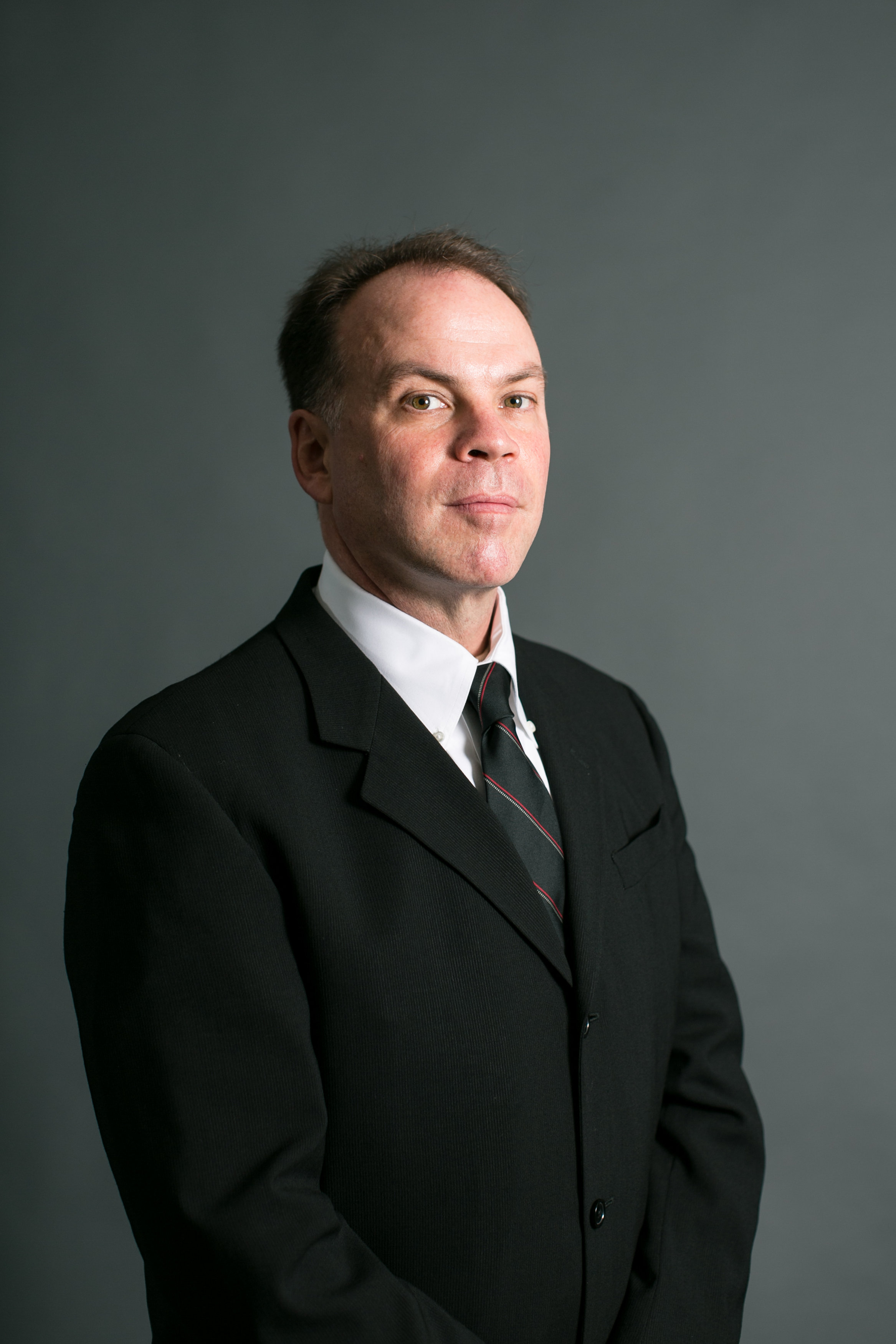
Today, Hill describes himself as disgusted by the process—and soured on Obamacare. “I really believe that we’ve created a monster—and it’s an unaccountable monster,” Hill told The Daily Signal.
Covered California declined comment on Hill’s allegations.
Other officials integral to Covered California’s efforts concur with Hill’s assessment. One of them headed the largest call center.
“They started this way too late for what they needed to do,” says the official who was hired in April 2013, five months before the website’s launch. He has since left that position and asked not to be named to protect his current job status.
“This program had to touch 58 counties, 11 federal agencies, all medical carriers and all advocates. To have a system that would be integrated seamlessly—somebody must have been smoking something if they thought that was going to happen.”

Disappointing Enrollment
It’s against that backdrop that Covered California finds itself now grappling with a big disappointment: low enrollment growth. California ranked near the bottom in overall growth, with a scant 1 percent increase over last year. “It’s a tiny fraction of the growth they were expecting,” says an official who helped implement the Affordable Care Act and examined California’s numbers.
As recently as last fall, the official says, California hoped to increase enrollment by 500,000 this year. But only an additional 7,098 have “selected a plan” for 2015.
“Their total enrollment is a step in the right direction but nowhere near what anyone thought it would be for the largest state in the country.”
Covered California would not answer our questions about enrollment figures.
Another telling statistic is Covered California’s poor retention rate. Even though people are required by law to have health insurance, only 65 percent of Covered California’s 2014 customers reenrolled in 2015. The rest dropped off. Covered California would not address our questions about lackluster retention and growth.
Last month, the agency issued a press release touting a younger and more diverse mix of customers.
“New enrollment for 2015 coverage is strong and has brought in consumers who our marketing and outreach targeted,” said Covered California Executive Director Peter Lee, overlooking the fact that his organization’s retention of last year’s customers was among the lowest in the country.
Hoping for a bump, California followed the lead of the federal HealthCare.gov effort and repeatedly extended this year’s enrollment deadline. The Feb. 15 cutoff was pushed back to Feb. 20 and then Feb. 22. Now, it’s been extended to the end of this month.
Call Center Chaos

The devastating crash of Covered California’s website and call centers on Oct. 1, 2013 was “the canary in the coalmine, an early warning of deep dysfunction,” according to Hill.
Pre-launch testing had proven disastrous. As with the national HealthCare.gov website, “it was breaking at the first click of the button,” says the former call center manager who worked under Hill. “Behind the scenes, states were worried. I know we were worried.”
Covered California contractors projected 10,000 calls the first day. The call center manager says he knew they were way off. “I and my training manager, who had launched call centers before, projected 20,000. We had 21,000 on day one. Our contractors were wrong.”
The HealthCare.gov website was on a parallel trajectory. It, too, suffered under hasty development and failed performance tests days before launch—all while the Obama administration put on a positive public face.
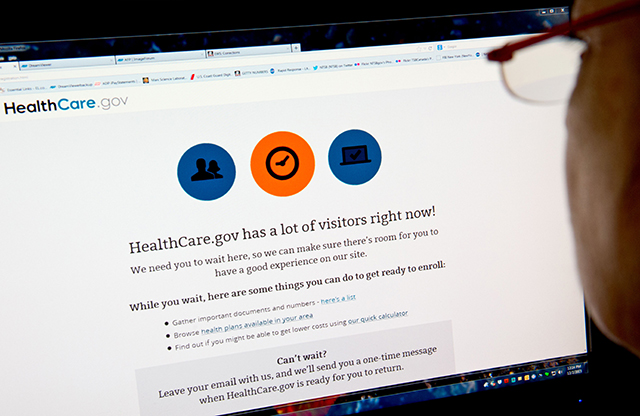
“The train was coming off the rails,” adds Hill. “The call center was going into meltdown.”
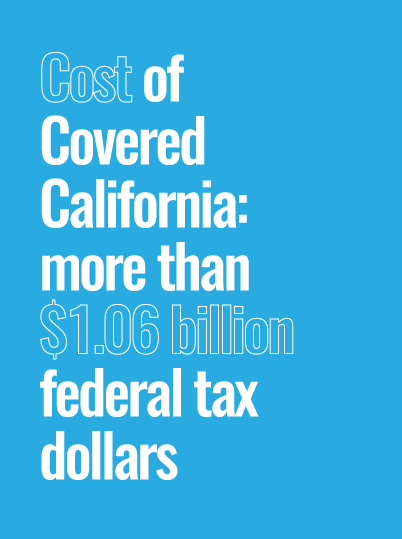
The meltdown lasted for months and fixes proved costly. Covered California would not provide a tally of expenses, but the agency ended up asking the federal government for an extra $155 million. That put the cost of Covered California at more than $1.06 billion federal tax dollars.
Enrollment Exaggeration?
Covered California’s disastrous debut triggered a house of cards. When the website crashed, consumers were directed to fill out paper applications; they were 33 pages long and took at least an hour to complete. What’s more, they couldn’t be coordinated with the electronic version because of a major design flaw. The forms didn’t match.
But Covered California counted duplicate applications as if they were enrollments, giving the impression that more people had successfully signed up. (The Obama administration did the same with national HealthCare.gov applications.)
For example, Covered California’s Lee publicly touted 30,000 successful enrollments for the first month. Hill says the actual number was closer to 4,000.
“A lot of the information that came out of Covered California was misleading or outright lies,” Hill insists.
Another Covered California official agrees. “There’s no way he didn’t know he wasn’t telling the truth,” says an official, who still works at the agency and asked not to be identified. “We were fully aware that those numbers were inflated. It was horrible … morale busting. Things were being said that were blatantly untrue.”
The Daily Signal asked for Lee’s side of the story, but Covered California declined to make him available. Hill says misinformation was aided and abetted by an uninformed press. In the midst of Covered California’s fiasco, he was stunned to read a New York Times article claiming the Golden State was an Obamacare utopia: the crown jewel of the health care reform effort.
On Nov. 24, 2013, Paul Krugman of The New York Times gushed:
What would happen if we unveiled a program that looked like Obamacare, in a place that looked like America, but with competent project management that produced a working website? Well, your wish is granted. Ladies and gentlemen, I give you California. … The California authorities have been especially forthcoming with data tracking the progress of enrollment. And the numbers are increasingly encouraging.That assessment was far from the reality, say the Covered California officials who spoke to The Daily Signal. Covered California declined to respond to our questions but issued this statement:
Covered California is proud that it has been the portal for nearly four million people to find coverage through one of our participating health plans or through low cost/no cost Medi-Cal; is helping more than a million people access financial assistance to lower their monthly health insurance premiums; through the Affordable Care Act has reduced the number of uninsured in California by half.>>> This is the first of two parts in The Daily Signal’s series, “Uncovering Covered California.” Tomorrow, in part two, insiders expose Covered California’s “culture of secrecy” and allegations that it promoted egregious waste of taxpayer dollars.
Monday, April 20, 2015
Sandy Hurricane Still Victims : Democrats Work Their Magic
Goodness - What corruption and fraud in programs that are administrated by democrats? Hey, why do you think they are corrupt in the first place? Democrats always have to have their share of the tax dollars up front before anyone else gets their chance. Little wonder the money never saw the light of day for the victims.
Just think how much fun the progressive socialist liberal democrats would still be having demonizing the Republicans if they had been in charge when Sandy hit the East coast and still thousands are suffer Sandy effects?
Remember the lies on top of the lies that the main stream media told for months about how the Republicans botched this disaster because they hated the blacks. Remember? Did the main stream media report anything about Katrina that was the truth?
Home Is Where the Heartache Is: Hurricane Sandy Victims Still Not Recovered
Josh Siegel / @SiegelScribe
EAST ROCKAWAY, N.Y.—For Frances Healy, a 90-year-old widow known as “Muzzy,” home is just a tease.
Just think how much fun the progressive socialist liberal democrats would still be having demonizing the Republicans if they had been in charge when Sandy hit the East coast and still thousands are suffer Sandy effects?
Remember the lies on top of the lies that the main stream media told for months about how the Republicans botched this disaster because they hated the blacks. Remember? Did the main stream media report anything about Katrina that was the truth?
Home Is Where the Heartache Is: Hurricane Sandy Victims Still Not Recovered
Josh Siegel / @SiegelScribe
EAST ROCKAWAY, N.Y.—For Frances Healy, a 90-year-old widow known as “Muzzy,” home is just a tease.
Muzzy lives so close to her gutted, molded home—an unhealed victim of a hurricane that hit nearly two-and-half years ago—that she can see it.
But she can’t live in it.
https://www.youtube.com/watch?feature=player_embedded&v=dMi2WNd-oPo
From her vantage point through a window in the trailer here in East Rockaway on Long Island in New York, she can see a home that, from the outside, looks the same before it met Hurricane Sandy.
It’s the same home that Muzzy and her late husband, Jimmy, built in 1947, transforming it from a “dump” to “heaven on Earth.”
But from the window of the trailer where she now lives, or from anywhere, what she can’t see is a way back into the home.
“It’s heartbreaking because there’s so many memories there,” said Muzzy, whose quiet, cracking voice belies a feistiness that showed itself when she playfully heckled a Daily Signal filmmaker for being too slow to get his equipment ready.
“We raised 10 children in this house,” Muzzy said. “We had so many memories in this house.”
This wasn’t supposed to be so hard—recovery.
“I know what I’m getting into living on the water,” says Kathleen Besedin, whose dream home in Baldwin Harbour, N.Y., was severely damaged in Hurricane Sandy.
“I am not a stupid person. I know it can flood and that’s why I did everything right.”
When Hurricane Sandy barreled toward the East Coast in the fall of 2012, many, like Muzzy, who had to be dragged away by her family, didn’t think they’d even have to leave their homes.
No one could have expected how devastating Hurricane Sandy turned out to be: 117 deaths, according to the Center for Disease Control and Prevention, and more than $60 billion in damage, second only to Hurricane Katrina.
And no one could have guessed how the mechanisms set up to protect homeowners, and to refurbish them against future storms, would fail.
Responding to accusations that damage assessment reports were fraudulently changed to minimize claims, the Federal Emergency Management Agency has agreed to review every flood insurance claim filed by homeowners affected by Hurricane Sandy.
Those actions came in the wake of law enforcement inquiries and reports by the New York Times and CBS News program “60 Minutes” on widespread fraud by engineering companies supervised by FEMA’s National Flood Insurance Program.
During a visit last month to Long Island, among the areas hardest hit by the storm, homeowners also spoke of problems related to a New York’s grant recovery program set up to fill the funding gaps left by their flood insurance and other forms of aid.
Launched in April 2013, New York Rising uses $4.4 billion in federal funding allocated to the state to help people rebuild their homes. New York Rising is similar to other grant programs in New York city and New Jersey.
But she can’t live in it.
https://www.youtube.com/watch?feature=player_embedded&v=dMi2WNd-oPo
From her vantage point through a window in the trailer here in East Rockaway on Long Island in New York, she can see a home that, from the outside, looks the same before it met Hurricane Sandy.
But from the window of the trailer where she now lives, or from anywhere, what she can’t see is a way back into the home.
“It’s heartbreaking because there’s so many memories there,” said Muzzy, whose quiet, cracking voice belies a feistiness that showed itself when she playfully heckled a Daily Signal filmmaker for being too slow to get his equipment ready.
“We raised 10 children in this house,” Muzzy said. “We had so many memories in this house.”
This wasn’t supposed to be so hard—recovery.
“I know what I’m getting into living on the water,” says @krainsbo.People who live on the water know the risks and insure themselves against them.
“I know what I’m getting into living on the water,” says Kathleen Besedin, whose dream home in Baldwin Harbour, N.Y., was severely damaged in Hurricane Sandy.
“I am not a stupid person. I know it can flood and that’s why I did everything right.”
When Hurricane Sandy barreled toward the East Coast in the fall of 2012, many, like Muzzy, who had to be dragged away by her family, didn’t think they’d even have to leave their homes.
No one could have expected how devastating Hurricane Sandy turned out to be: 117 deaths, according to the Center for Disease Control and Prevention, and more than $60 billion in damage, second only to Hurricane Katrina.
And no one could have guessed how the mechanisms set up to protect homeowners, and to refurbish them against future storms, would fail.
Responding to accusations that damage assessment reports were fraudulently changed to minimize claims, the Federal Emergency Management Agency has agreed to review every flood insurance claim filed by homeowners affected by Hurricane Sandy.
Those actions came in the wake of law enforcement inquiries and reports by the New York Times and CBS News program “60 Minutes” on widespread fraud by engineering companies supervised by FEMA’s National Flood Insurance Program.
During a visit last month to Long Island, among the areas hardest hit by the storm, homeowners also spoke of problems related to a New York’s grant recovery program set up to fill the funding gaps left by their flood insurance and other forms of aid.
Launched in April 2013, New York Rising uses $4.4 billion in federal funding allocated to the state to help people rebuild their homes. New York Rising is similar to other grant programs in New York city and New Jersey.
Refund Checks : People Giving Money Away
Good question - why do people allow the government to dictate how they save or spend their money? Is it Gruberism or what? Or that they are just to lazy to make the effort to investigate the possibilities that are valuable to them to change the way deduction are made to their paychecks?
Your Tax Refund Is an Interest-Free Loan to the Government
Source: Ben Casselman, Reuben Fischer-Baum, "Don't Be So Happy About That Tax Refund," FiveThirtyEight, April 15, 2015.
April 16, 2015
More than three in four taxpayers get refunds, and the average amount they get back is close to $3,000, according to the Internal Revenue Service (IRS). But if you are among the millions expecting a payout from the IRS this spring, make no mistake: That money was yours all along. Getting a refund means you paid too much in taxes last year and the government is paying that money back — without interest. How much do Americans give up by lending their money to the government?
Consider these scenarios: Suppose, for example, that you'd put the money in a savings account instead. Interest rates right now are low — really low. If your refund is $3,000, the interest you could have accrued might have been enough to buy yourself a small cup of coffee. But suppose you'd invested the money instead. Last year was a good one for the stock market. If over the course of the year you'd put $3,000 in a basic index fund that tracks the S&P 500, it'd be worth an extra $235 or so today. That's a solid month's worth of weekday lunches. Of course, there's no guarantee the market will repeat those results this year, and investing runs the risk that you'll lose your refund altogether.
Yet, most Americans do not seem to have much problem with lending their money to the Treasury interest-free. The Bankrate survey found that 57 percent of respondents wanted to receive a refund, and a third of respondents said they planned to save or invest their refunds.
There's some research to support tax refunds as a way of encouraging saving: Economists have found that people are more likely to spend $500 if it shows up as an extra $20 in every paycheck than if it arrives as one lump sum.
Your Tax Refund Is an Interest-Free Loan to the Government
Source: Ben Casselman, Reuben Fischer-Baum, "Don't Be So Happy About That Tax Refund," FiveThirtyEight, April 15, 2015.
April 16, 2015
More than three in four taxpayers get refunds, and the average amount they get back is close to $3,000, according to the Internal Revenue Service (IRS). But if you are among the millions expecting a payout from the IRS this spring, make no mistake: That money was yours all along. Getting a refund means you paid too much in taxes last year and the government is paying that money back — without interest. How much do Americans give up by lending their money to the government?
Consider these scenarios: Suppose, for example, that you'd put the money in a savings account instead. Interest rates right now are low — really low. If your refund is $3,000, the interest you could have accrued might have been enough to buy yourself a small cup of coffee. But suppose you'd invested the money instead. Last year was a good one for the stock market. If over the course of the year you'd put $3,000 in a basic index fund that tracks the S&P 500, it'd be worth an extra $235 or so today. That's a solid month's worth of weekday lunches. Of course, there's no guarantee the market will repeat those results this year, and investing runs the risk that you'll lose your refund altogether.
Yet, most Americans do not seem to have much problem with lending their money to the Treasury interest-free. The Bankrate survey found that 57 percent of respondents wanted to receive a refund, and a third of respondents said they planned to save or invest their refunds.
There's some research to support tax refunds as a way of encouraging saving: Economists have found that people are more likely to spend $500 if it shows up as an extra $20 in every paycheck than if it arrives as one lump sum.
Subscribe to:
Posts (Atom)
